
The simulated shipping line of Port Virtual Lab
Navigate maritime logistics through realistic simulation
Explore routes, vessels, ports and cargo services while managing practical shipping operations in a safe digital learning environment.
Already participating in a course? Access PVL.ONE (opens in a new tab)
- Services
- 9
- Ports of call
- 41
- Vessels
- 25
Why use this site
-
Built for the middle of an exercise
Rotations, dimensions and charges, reachable in two clicks on a classroom phone.
-
No account, no cookies, no tracking
Everything here is open. Nothing you type on this site is transmitted or stored.
-
It says when it does not know
Every figure records where it came from. Unconfirmed values read "To be confirmed".
-
Honest about being a simulation
No invented customers, no invented emissions, no claim SDG Lines cannot support.
What do you need to do?
The 6 tasks that come up most often during a training exercise. Each one goes straight to the information, without a landing page in between.
- Find a route Five services, their ports of call and the vessels deployed on them.
- Find a port Search all 41 ports of call by name, country or region.
- Choose equipment Containers, reefers, flat racks and roll trailers with their dimensions.
- View a vessel Technical data for the 25 vessels in the fleet.
- Check arrival charges Local charges applied on arrival, by port and by cargo type.
- Request a quotation Build a simulated quotation for a shipment in your exercise.
Cargo services
What SDG Lines carries, and the rules that apply to each cargo type in the simulation.
-
Container services
Dry, high cube and open top units across all five services.
-
Ro-Ro services
Accompanied and unaccompanied trailers, cars and high and heavy cargo.
-
Cold chain
Reefer containers with temperature monitoring for food and pharmaceuticals.
-
Dangerous goods
IMDG classified cargo, declarations and segregation requirements.
-
Project cargo
Out of gauge and heavy lift shipments on flat racks and roll trailers.
-
Motorways of the Sea
Short sea relations designed to move freight from road to sea.
The network
Five services connecting 41 ports across Europe, the Mediterranean, Africa, the Middle East and Asia.
- Westmed
- Eastmed
- Optimed
- EurAsia
- Gimnesias
- Atlantic Americas
- Pacific Americas
- Intercoastal Americas
- Transatlantic
- Ports of call
- 41
- Countries
- 29
- Regions
- 14
- Calls in rotation
- 57
- WMED
Westmed
Western Mediterranean, Maghreb and the Atlantic extension
Connects the Spanish and French Mediterranean coasts with the Maghreb, and continues through the Strait of Gibraltar to the Canary Islands and West Africa.
- Ports of call
- 10
- Vessels
- 2
- EMED
Eastmed
Western Mediterranean to the Aegean, Levant and Nile delta
Links Barcelona and the Tyrrhenian ports with Greece, Türkiye, Lebanon and Egypt, ending at the Mediterranean entrance to the Suez Canal.
- Ports of call
- 8
- Vessels
- 2
- OPTI
Optimed
Central Mediterranean, Adriatic and Libya
A pure car and truck carrier service linking Barcelona with Sicily, Malta, the Adriatic and the North African coast.
- Ports of call
- 8
- Vessels
- 3
- EURA
EurAsia
North Europe and Iberia to the Gulf, India and the Far East
The long haul service of the network, running from the North Sea through Suez to the Arabian Gulf, India and Korea.
- Ports of call
- 15
- Vessels
- 6
- GIMN
Gimnesias
Barcelona to the Balearic Islands
A short island shuttle between Barcelona and Palma de Mallorca, and the shortest rotation in the network.
- Ports of call
- 2
- Vessels
- To be confirmed
- AM-ATL
Atlantic Americas
Caribbean to the North American Atlantic coast
Links Cartagena de Indias with New York and Halifax, carrying coffee and agricultural exports north and manufactured goods south.
- Ports of call
- 3
- Vessels
- 2
- AM-PAC
Pacific Americas
United States and Canada on the Pacific coast
A short shuttle between Los Angeles and Vancouver for containerised general cargo, machinery, forest products and refrigerated cargo.
- Ports of call
- 2
- Vessels
- 1
- AM-INT
Intercoastal Americas
North American Atlantic and Pacific coasts through the Panama Canal
The long rotation: New York to Cartagena, through the Panama Canal to Los Angeles and Vancouver, and home the same way.
- Ports of call
- 4
- Vessels
- 5
- TATL
Transatlantic
Western Mediterranean to the North American Atlantic coast
The crossing. Barcelona and Valencia to New York and Halifax by way of Tanger Med, joining the Mediterranean network to the American one.
- Ports of call
- 5
- Vessels
- 3
The fleet
Fourteen vessels, named after women who changed what we know
Every ship in the SDG Lines fleet carries the name of a woman in science, medicine, mathematics, literature or education. The names are part of the teaching: a fleet list is also a reading list.
Who this site is for
Three groups arrive here wanting different things. Start from the one that describes you.
-
Students and course participants
You are in the middle of an exercise and need a figure, a rotation or a unit specification now.
- Find which service reaches a port
- Check what fits in a container
- See what is charged on arrival
- Build a simulated quotation
-
Trainers and teachers
You are preparing a case and need to know what the site says, and how far it has been confirmed.
- See what changed and when
- Check how content is reviewed
- Read the transport documents reference
- Use the network map in class
-
Institutions evaluating Port Virtual Lab
You are deciding whether simulation-based learning fits your programme, and want to see the substance.
- Understand what the simulation is
- See how it fits Port Virtual Lab
- Read how sustainability is taught
- Review the accessibility commitment
How the simulation works
SDG Lines is one of the companies that make up Port Virtual Lab, the simulation environment built by Escola Europea - Intermodal Transport. Learners take the part of shippers, forwarders and agents, and use this website the way they would use a real carrier website: to find a service, check what equipment fits the cargo, look up what it will cost on arrival, and request a quotation.
Nothing on this site moves real cargo. The value is that everything behaves as though it might, so that a mistake made here costs nothing but teaches the same lesson.
-
Find the service
Start from a port or from a cargo type. Each service page lists its rotation, the vessels deployed on it and the cargo it accepts.
-
Choose the equipment
Match the cargo to a container, a reefer, a flat rack or a roll trailer, using the published internal dimensions and payloads.
-
Check the arrival charges
Local charges differ by port and by cargo type. They are what turns a freight rate into a landed cost.
-
Request a simulated quotation
Submit the shipment and receive a quotation reference you can use in the rest of the exercise.
Sustainability
The Sustainable Development Goals, built into the exercise
The name SDG Lines is not decoration. The simulation is designed so that a learner comparing a road leg with a sea leg, or a direct call with a transhipment, is also comparing their consequences. Modal shift, emissions and the trade-offs between speed and impact are part of the decision, not a separate topic.
How sustainability is taught hereDigitalisation
Operations that behave like the real thing
Quotation requests, shipment references, documentation and arrival charges all follow the patterns a learner will meet in a working office. The point of digitalising the simulation is that the habits transfer: someone who has used this site can read a real carrier website without being taught it twice.
Digital operations in the simulationQuestions people actually ask
Mostly asked halfway through an exercise, usually out loud, usually to a trainer who was explaining something else.
More about the simulation-
Is SDG Lines a real shipping company?
No. SDG Lines is an educational simulation operated by Escola Europea - Intermodal Transport. It owns no vessels, moves no cargo and holds no licences. The IMO numbers, call signs and agency addresses on this site belong to the simulation and correspond to nothing in the real world. You cannot book a shipment here.
What SDG Lines is, and is not → -
Do I need an account to use this site?
No. Everything on this website is open: routes, ports, the fleet register, equipment specifications, arrival charges and the quotation form. Port Virtual Lab itself needs an account, which is issued through an Escola Europea course, but you do not need one to look anything up here.
-
Why do so many figures say "To be confirmed"?
Because nobody has confirmed them yet, and the alternative would be filling the gap with something plausible. A learner quoting an invented transit time in an assessed exercise would have no way of knowing it was invented. Every record on the site states where its values came from and how far they have been reviewed.
How content is reviewed → -
Where do I get the freight rate and the charge amounts?
From your trainer. Rates and tariffs in the simulation are set per exercise, which is also how a real tariff works: negotiated and dated rather than a fixed property of a port. The arrival charges page explains what each charge covers and who pays it, which is the part that transfers.
Arrival charges explained → -
Does the quotation tool send my details anywhere?
Yes, and it is worth knowing the difference. This website collects nothing and has no form on it. Quotations are produced by the Quotation Desk, a separate application, and when you issue one there your name, e-mail address, organisation and the shipment are sent to a Google Apps Script endpoint and recorded, which is how it gives the quotation a number and a PDF. Use the name and address your exercise asks for rather than your own.
What is sent, and by what → -
Can I track a shipment here?
Not on this site. A tracker needs a system that knows where shipments are, and SDG Lines has none, so it could only ever show invented movements. Shipment status during an exercise is maintained inside Port Virtual Lab by your trainer.
What tracking events mean → -
The old website had a page that has moved. Where is it?
The site was rebuilt in 2026 and the addresses changed. Old links redirect automatically wherever the destination is unambiguous, and the search covers every port, route, vessel, container type and charge. If you had an exercise written against the old site, the updates page lists what changed.
What changed in the rebuild → -
Can we use this with our own students?
The website is public and free to consult. Running exercises inside Port Virtual Lab goes through Escola Europea, which issues the accounts and provides the training material. The content is published under a Creative Commons licence that permits sharing with attribution for non-commercial use.
About Port Virtual Lab →
What changed recently
Changes to the simulation itself, so that an exercise written earlier can be checked against what the site says now.
- Release
The site now uses the real SDG Lines brand
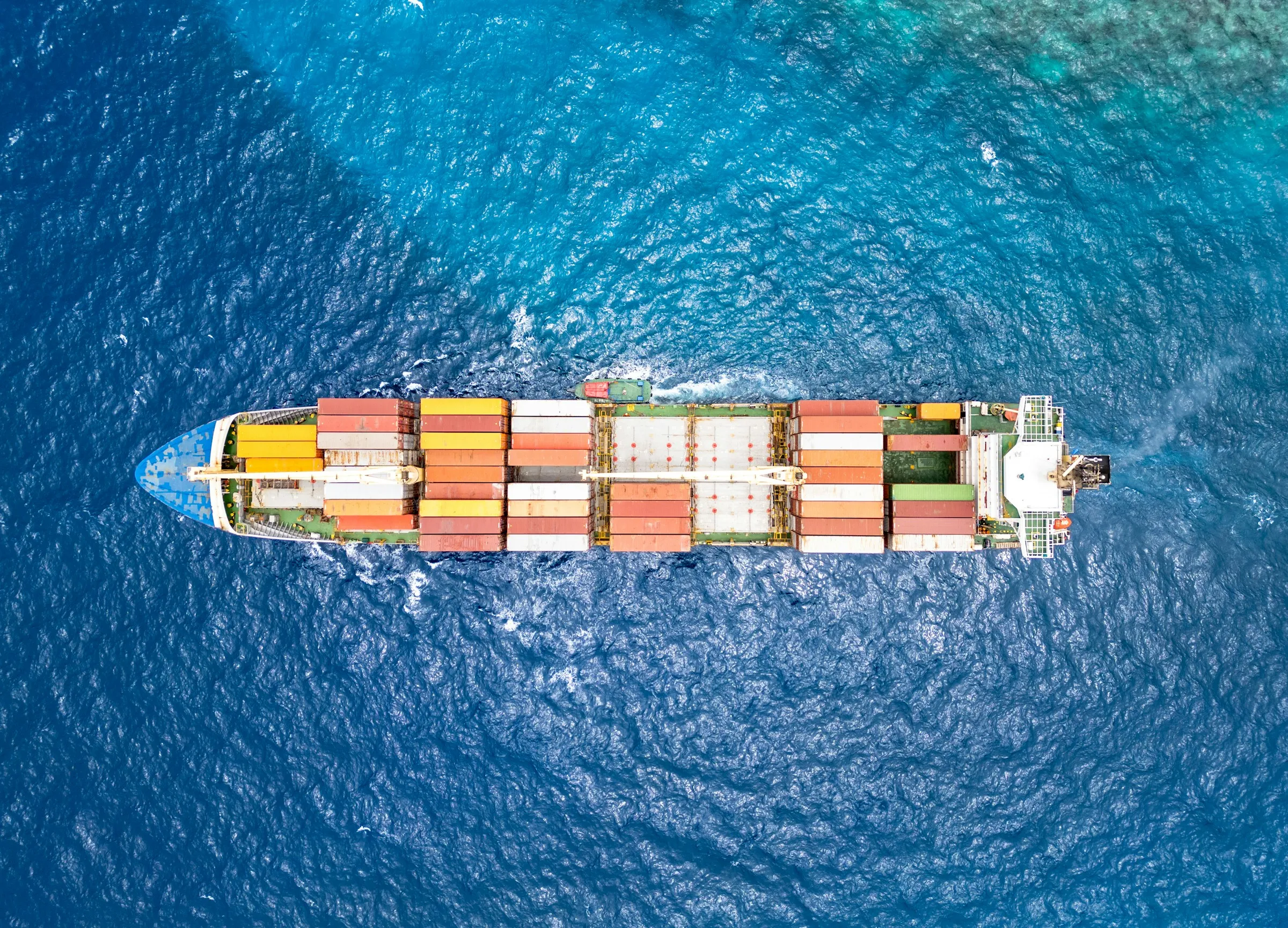
Colours are sampled from the logo artwork rather than estimated, the logo itself appears across the site, and the home page carries a photograph.
- Release
The website was rebuilt
A complete redesign, rebuilt from an audit of the previous site. Addresses changed, route rotations are published for the first time, and the customer testimonials were removed.
- Correction
Vessel and port name spellings corrected
Two vessel names and six port names were corrected against their real-world sources. All are pending confirmation by the product owner.
Ready to run an operation?
Build a simulated quotation for your shipment, or start from the network and work backwards to the service that fits.